
Commercial auto insurance for work trucks & vans
Coverage for vehicles operated in your business, including work pickups, service vans, and delivery vehicles. May include commercial liability and vehicle damage protection.
How this coverage works
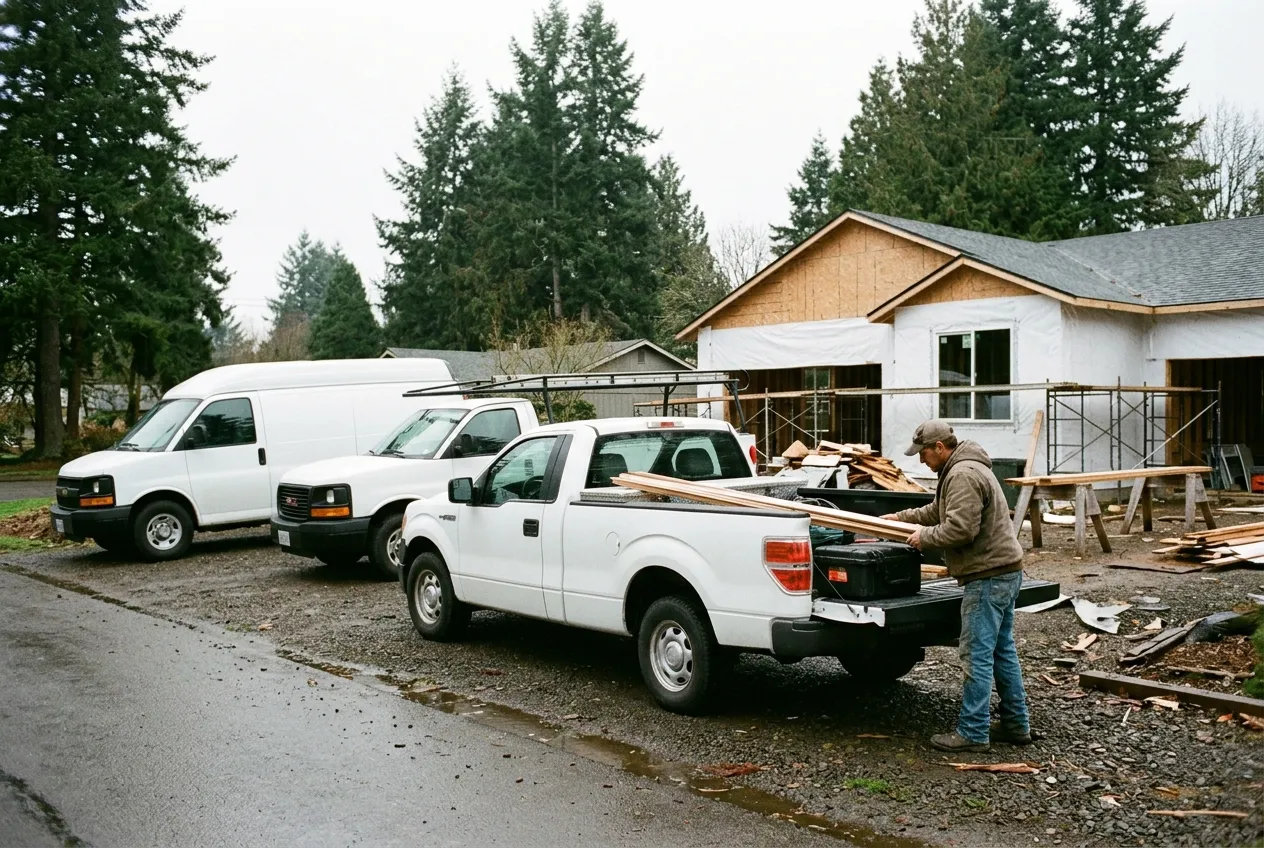
Commercial Auto insurance protects vehicles titled to your business, driven by employees, or used routinely to haul tools, materials, and client deliveries. Policies combine Combined Single Limit (CSL) or split liability for third-party injuries and property damage with optional Collision and Comprehensive physical damage tailored to pickups, cargo vans, box trucks, and utility trailers.
Deductibles typically range from $500 to $2,500 per vehicle for physical damage, while liability carries no deductible on standard forms. Endorsements such as Hired & Non-Owned Auto (HNOA), Uninsured Motorist, and permanently attached rack coverage close gaps mandated by commercial contracts, project owners, and fleet lenders.
What it typically covers
- Third-party bodily injury and property damage caused by an at-fault collision involving a scheduled business pickup, van, or box truck
- Collision, theft, vandalism, glass breakage, and weather damage to insured commercial vehicles and attached ladder racks or utility bodies
- Hired & Non-Owned Auto (HNOA) liability when employees run business errands in personal cars or operate short-term rental box trucks
- Uninsured and Underinsured Motorist (UM/UIM) protection and state-applicable Personal Injury Protection (PIP) for injured occupants
- Towing, roadside labor, and trailer interchange or non-owned trailer physical damage when properly endorsed
Common exclusions
- Portable power tools, ladders not permanently bolted, and loose equipment inside a cargo van (requires Inland Marine)
- Personal household commuting by unlisted drivers or business use involving excluded vehicle classes and unapproved drivers
- Third-party freight or customer goods hauled for hire without a dedicated Motor Truck Cargo endorsement or policy
- Mechanical wear and tear, engine breakdown, racing, or intentional acts causing vehicle damage
Practical details before you quote
Real-world scenarios
- A Hillsboro plumbing and HVAC crew operating four Sprinter cargo vans along Hwy 26 and crossing into Beaverton and Vancouver for commercial service calls
- A Woodburn cabinet and millwork fabricator delivering custom cabinetry in a 16-foot box truck requiring a $1,000,000 CSL general contractor COI
- A Portland courier and floral delivery shop whose staff regularly drives personal sedans or weekend rental vans during peak seasonal orders
What shapes your price
- Gross Vehicle Weight Rating (GVWR), body class, permanently installed racks, and stated vehicle replacement value
- Driver motor vehicle records (MVRs), commercial driving experience, and number of scheduled operators
- Garaging ZIP code, operating radius (local Willamette Valley vs. regional OR/WA), and state or federal filing requirements
- Selected liability limit ($500,000 vs. $1,000,000 CSL), HNOA inclusion, and physical damage deductible levels
What to have ready
- Work vehicle VINs, gross weight, and permanent equipment racks
- Driver list, license numbers, and operating radius
- Business activity and any general contractor contract requirements
Pairing Commercial Auto with CGL, Bonds, or Workers Comp allows our commercial desk to check multi-line carrier savings.
Frequently asked questions
Common questions on coverage limits, requirements, and renewals in Oregon and Washington.
Personal Auto policies are rated for household commuting and typically exclude vehicles titled to an LLC or corporation, regular delivery routes, or daily jobsite hauling. Using a personal policy for commercial operations risks claim denial or mid-term cancellation—especially when a general contractor requests a commercial certificate.
HNOA extends liability coverage to your business when an employee drives a personal vehicle for a supply run or client visit, or when you rent a short-term cargo van or truck. It protects the business against third-party lawsuits, though it does not pay for physical damage to an employee’s personal car.
No—Commercial Auto covers the vehicle itself and permanently bolted equipment like ladder racks or toolboxes, not loose portable saws, lasers, or welders stored inside. Protecting portable trade tools against jobsite or overnight van theft requires adding Commercial Inland Marine coverage.
Heavier trucks exceeding weight thresholds (such as 26,001 lbs GVWR), for-hire property hauling, or interstate commercial vehicles crossing between Oregon and Washington can trigger Oregon Commerce and Compliance Division (CCD), Washington UTC, or federal USDOT insurance filings that must be structured cleanly at quoting.
Related coverages
View all coverages in this category
Commercial General Liability (CGL)
Helps protect your business against third-party claims for bodily injury or property damage connected to your operations—for example, if a visitor is injured at your premises or job site.
Explore coverage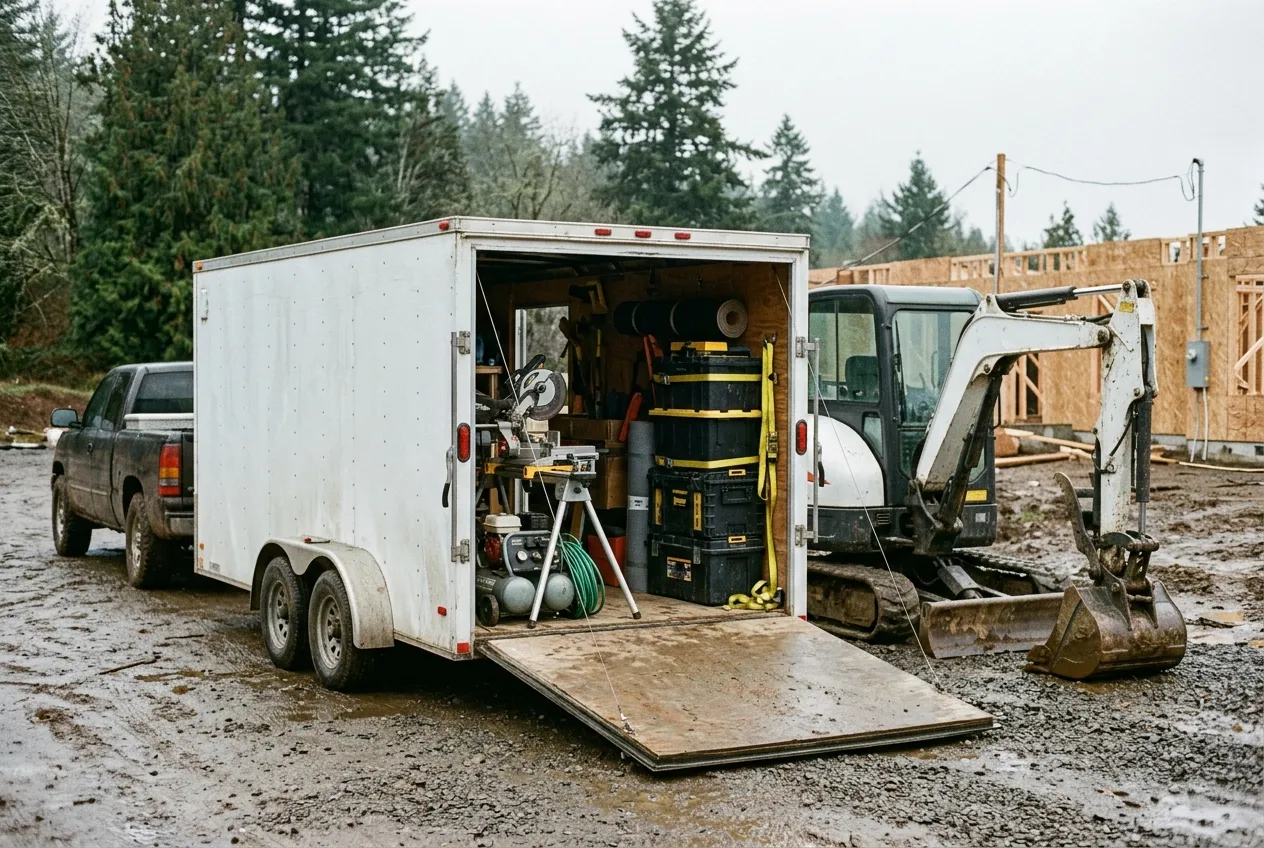
Commercial Inland Marine Insurance
Helps protect contractor tools, machinery, and valuable mobile equipment while transported between sites or actively used away from a fixed location, such as on a job site.
Explore coverage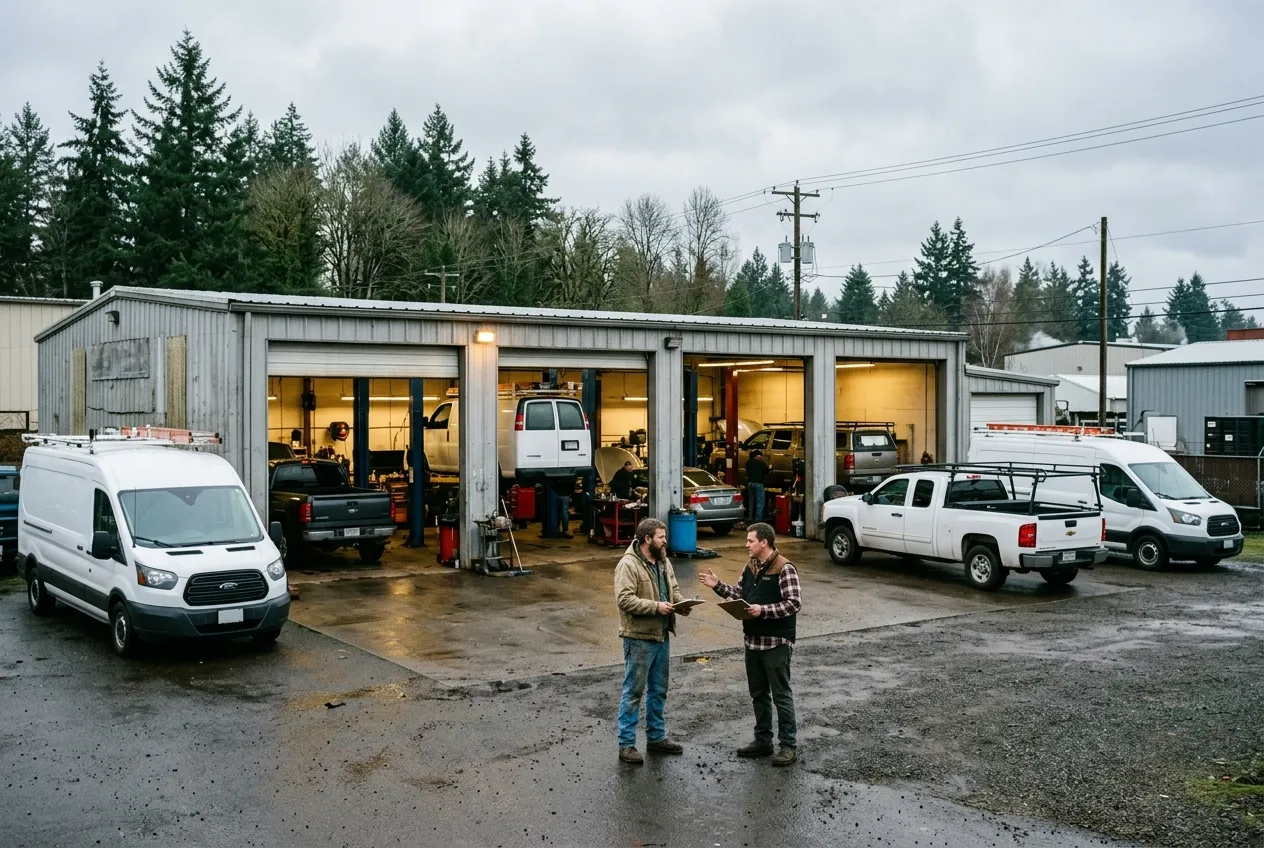
Commercial Umbrella Insurance
Adds an extra layer of liability protection above the limits of specific underlying commercial policies according to policy conditions.
Explore coverage
Personal Auto Insurance
Coverage for everyday personal vehicles. Options may include liability protection and physical damage coverage for your vehicle depending on the limits and deductibles you choose.
Explore coverage
Compare clear options in your language
Our licensed advisors compare different carriers across Oregon and Washington and normally respond within 60 to 90 minutes during business hours.