
Surety bonds for contractor licenses & contracts
Financial guarantees backing an obligation to a third party—such as state contractor license bonds (like Oregon CCB requirements), municipal permits, or project contracts.
How this coverage works
A Surety Bond is a three-party compliance guarantee binding the business (Principal) and bonding company (Surety) to a state agency, municipality, or project owner (Obligee). Rather than shielding the business from loss like insurance, a contractor license, permit, or contract bond assures third parties of statutory performance up to the penal sum.
Bond premiums are priced annually or multi-year based on the required penal sum, license classification, and owner credit and financial history, carrying zero traditional deductible. If a valid claim is paid against the bond, the surety exercises indemnity rights to recover the paid sum and legal expenses from the business.
What it typically covers
- Oregon CCB Residential and Commercial contractor license bonds guaranteeing statutory compliance for property owners and suppliers
- Washington L&I General ($30,000) and Specialty ($15,000) contractor registration bonds required before operating legally
- Municipal right-of-way, sidewalk, excavation, and city business permit bonds required by Oregon and Washington jurisdictions
- Bid, Performance, and Payment contract bonds protecting project owners when separately underwritten for commercial bids
Common exclusions
- Does not eliminate personal or corporate indemnity—the Principal must reimburse the surety for valid claims and defense costs paid
- Does not substitute for Commercial General Liability (bodily injury or third-party property negligence claims)
- Does not extend to work performed outside active licensed periods or under an unbonded legal entity name
- Does not pay punitive penalties outside statutory bond statutes or beyond the stated penal sum limit
Practical details before you quote
Real-world scenarios
- A new Hillsboro roofing LLC securing a $20,000 Oregon CCB Residential Specialty bond alongside initial CGL to activate its contractor license
- An established Portland remodeler holding dual CCB endorsements renewing both a $25,000 Residential General bond and a separate Commercial Level 2 bond
- A Vancouver, WA concrete contractor updating its Washington L&I General Contractor registration to the mandatory $30,000 statutory bond amount
What shapes your price
- Required statutory penal sum (from $15,000 Specialty up to $80,000 Oregon Commercial Level 1 or project contract size)
- Personal credit profile of principal business owners and corporate financial strength (especially for contract performance bonds)
- Trade experience, years licensed without prior bond claims, and whether single-year or multi-year billing is selected
- Exact bond category (continuous license bond vs. municipal permit or commercial performance bond)
What to have ready
- Required bond type and penal sum / dollar limit (license, permit, or contract)
- Legal business entity name and owner/principal contact details
- Target filing effective date
When contractors bundle Surety Bonds alongside General Liability and Commercial Auto, we check multi-line carrier availability.
Frequently asked questions
Common questions on coverage limits, requirements, and renewals in Oregon and Washington.
Following Oregon HB 2922 (effective Jan 1, 2024), CCB residential bonds run $15,000 (Limited), $20,000 (Specialty), and $25,000 (General), while commercial bonds span $25,000 to $80,000 depending on license level. In Washington (effective July 1, 2024), L&I requires $30,000 for General Contractors and $15,000 for Specialty Contractors.
No. General Liability protects your business financially against accidental third-party bodily injury or property damage claims. A Surety Bond protects the public or state agency if you violate licensing laws or fail to complete obligations—and if the surety pays a claim, you are legally obligated to reimburse the surety.
Oregon CCB enforces strict separation between residential and commercial surety funds so a residential claim cannot deplete protection meant for commercial projects, and vice versa. Dual-endorsed contractors must maintain and file two distinct bond instruments matching each endorsement tier.
State licensing databases match filings electronically. Even a missing "LLC," mismatched DBA spacing, wrong business structure (sole proprietor vs. corporation), or transposed Washington UBI number causes automatic rejection or license suspension until an amended bond or rider is filed.
Related coverages
View all coverages in this category
Commercial General Liability (CGL)
Helps protect your business against third-party claims for bodily injury or property damage connected to your operations—for example, if a visitor is injured at your premises or job site.
Explore coverage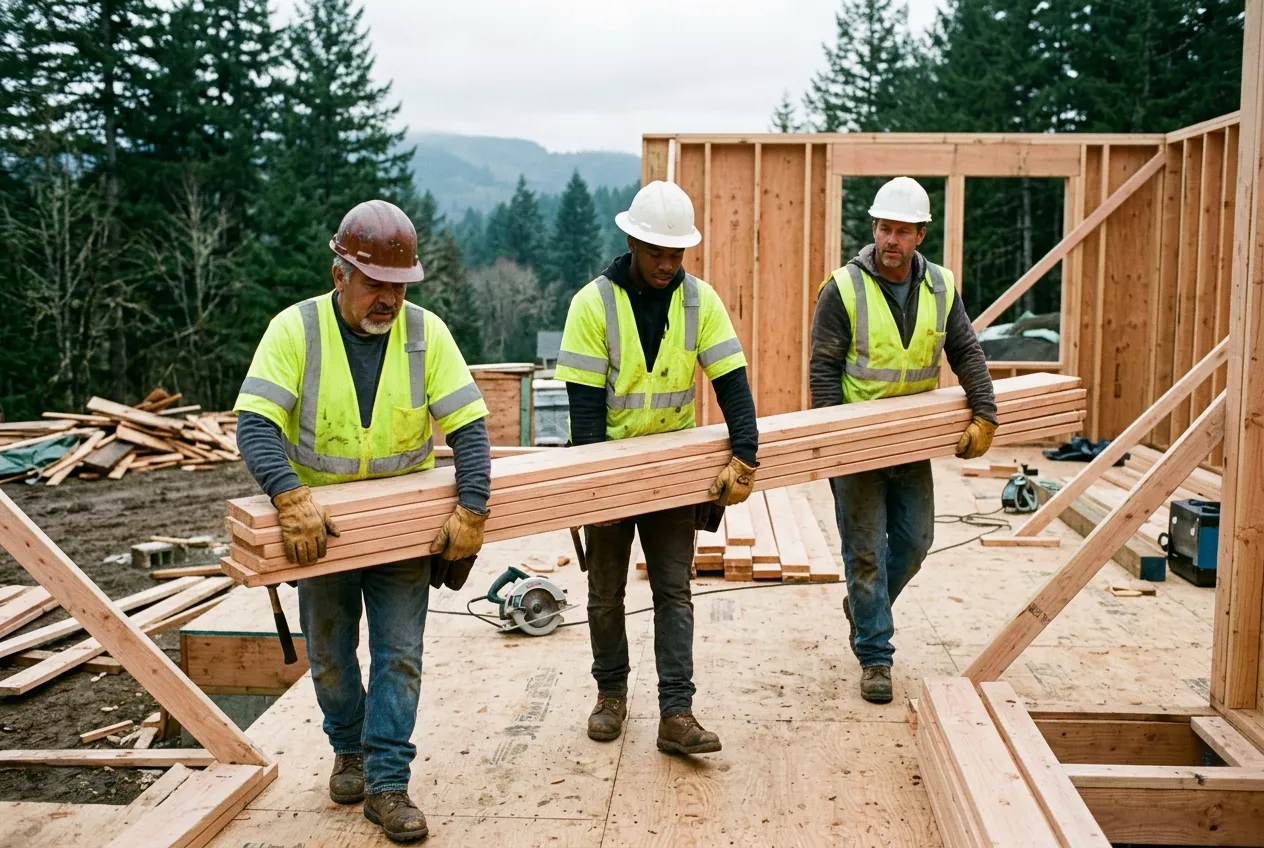
Workers' Compensation Insurance
Provides statutory benefits for employees experiencing a work-related injury or illness, helping cover medical expenses and a portion of lost wages.
Explore coverage
Commercial Inland Marine Insurance
Helps protect contractor tools, machinery, and valuable mobile equipment while transported between sites or actively used away from a fixed location, such as on a job site.
Explore coverage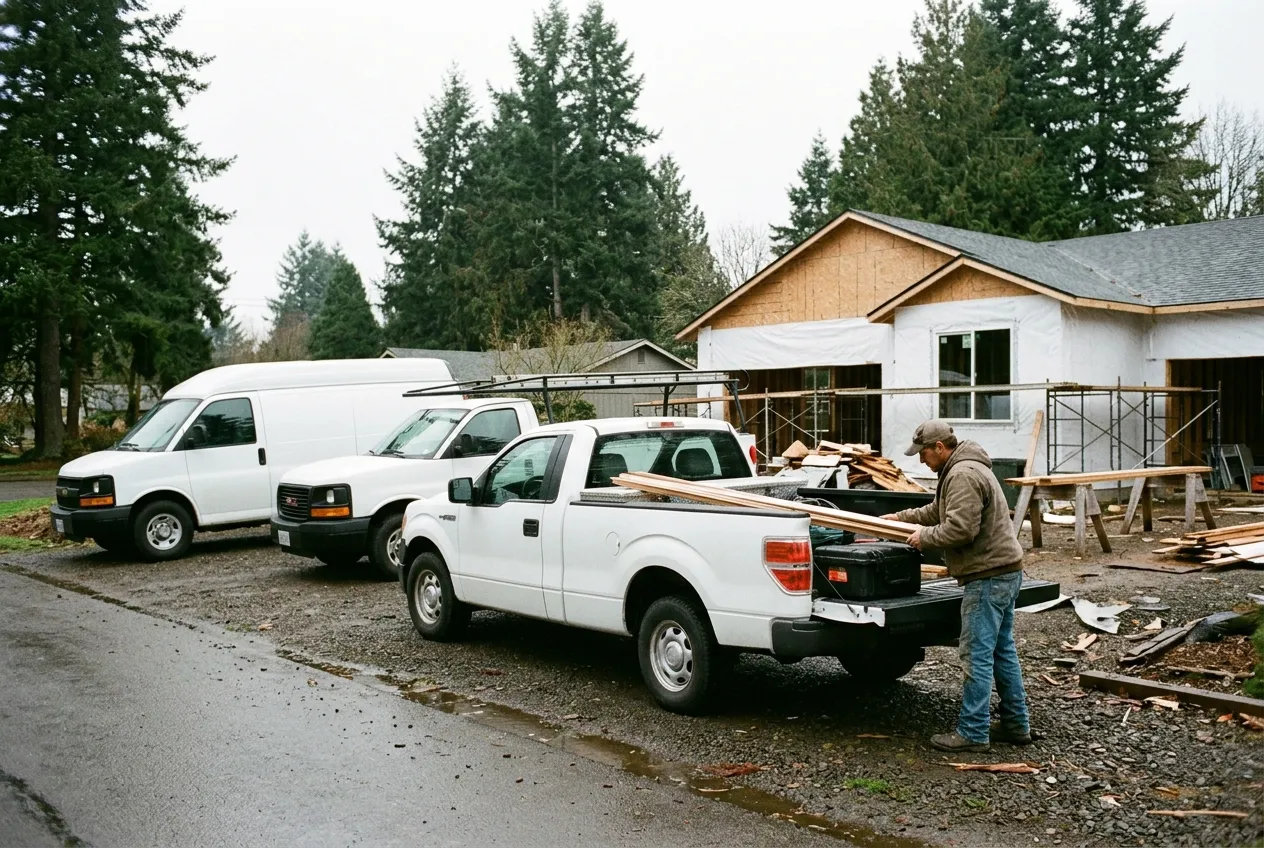
Commercial Auto Insurance
Coverage for vehicles operated in your business, including work pickups, service vans, and delivery vehicles. May include commercial liability and vehicle damage protection.
Explore coverage
Compare clear options in your language
Our licensed advisors compare different carriers across Oregon and Washington and normally respond within 60 to 90 minutes during business hours.