
Commercial umbrella excess liability protection
Adds an extra layer of liability protection above the limits of specific underlying commercial policies according to policy conditions.
How this coverage works
Commercial Umbrella insurance adds an extra layer of excess liability protection sitting above underlying Commercial General Liability, Commercial Auto, and Employers’ Liability (including Washington Stop-Gap) policies. Commonly structured in $1,000,000 increments from $1,000,000 to $10,000,000, it activates once an underlying policy’s per-occurrence or annual aggregate limit is exhausted by a catastrophic third-party claim.
Claims covered by scheduled underlying policies carry a $0 retention; a Self-Insured Retention (typically $10,000) applies only when the Umbrella drops down to cover broader gaps. Underwriters strictly require maintaining specified primary limits—commonly $1,000,000 per occurrence on CGL and Auto—without coverage lapses.
What it typically covers
- Excess catastrophic bodily injury or multi-vehicle property judgments exceeding your primary $1,000,000 Commercial Auto CSL limit
- Severe jobsite injury awards or multi-unit fire property losses exhausting your underlying $1,000,000/$2,000,000 CGL limits
- Excess limits sitting above Part B Employers’ Liability or Washington Stop-Gap coverage following severe workplace lawsuits
- Additional legal defense expenses once primary underlying limits are fully depleted by covered settlements or judgments
Common exclusions
- Underlying policy exclusions (such as your own defective workmanship, owned tools, or professional E&O unless specifically scheduled)
- Statutory Part A Workers’ Compensation medical or wage-replacement benefits
- Uninsured gap exposure created if an underlying CGL or Auto policy lapses below the Umbrella’s required attachment point
- Criminal penalties, intentional misconduct, and non-insurable statutory fines
Practical details before you quote
Real-world scenarios
- A Hillsboro commercial site-prep contractor bidding school and municipal utility upgrades requiring a $5,000,000 combined excess certificate
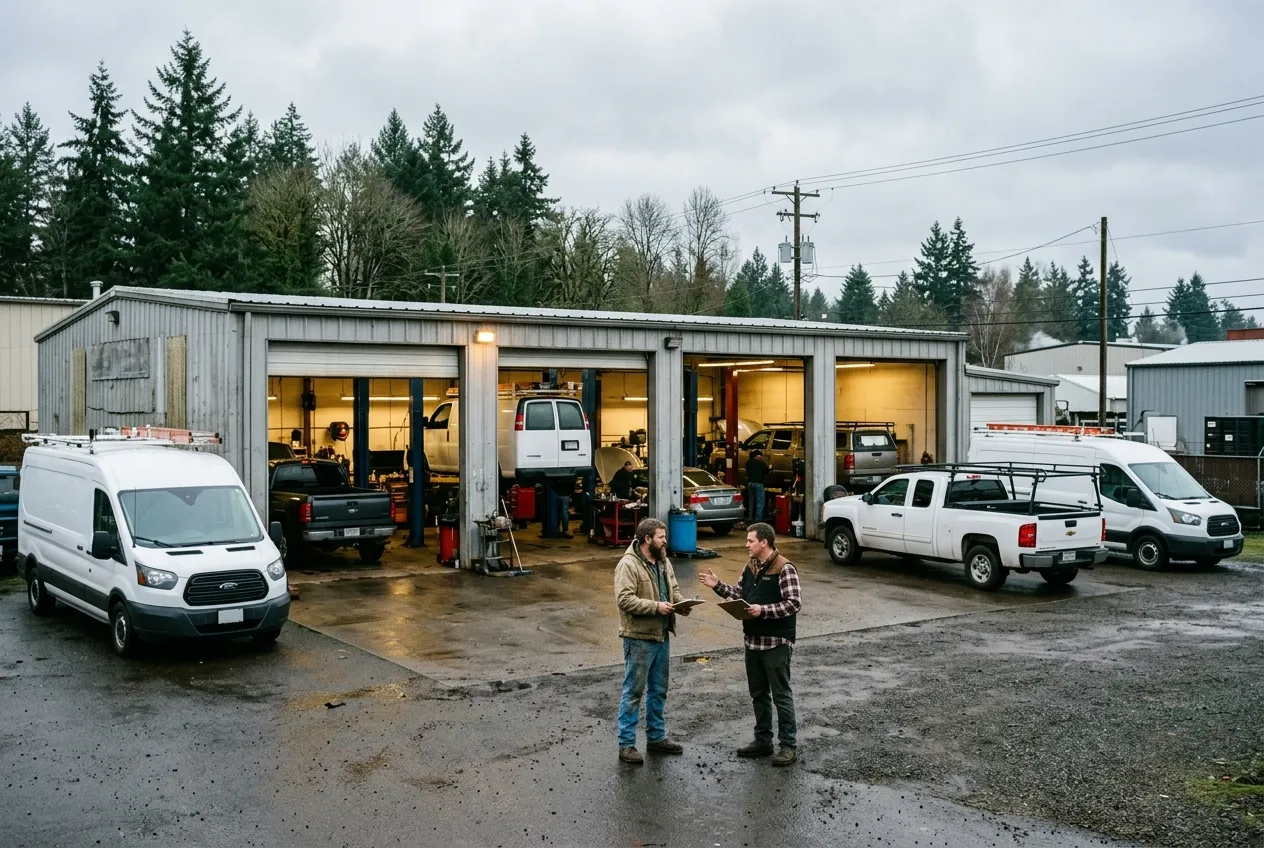
- A Willamette Valley fleet-based repair workshop operating six heavy service trucks alongside a multi-bay garage lease requiring $2M/$4M+ limits
- A Tigard restaurant group leasing space inside a regional shopping center whose landlord mandates $3,000,000 total liability including Liquor excess
What shapes your price
- Number of scheduled heavy commercial trucks, sedans, and vans exposed to highway catastrophic loss
- Underlying CGL trade hazard class, annual gross receipts, and Liquor or Stop-Gap underlying endorsements included
- Desired excess layer ($1M, $2M, $5M, or higher) and whether underlying policies share the same carrier or require follow-form coordination
- Prior large-loss history and contractual indemnity agreements signed with general contractors or landlords
What to have ready
- Underlying CGL, Commercial Auto, and Workers Comp limit schedules
- Contractual excess limit required ($1M, $2M, or higher)
- Annual gross revenue and fleet size summary
Coordinating your Umbrella carrier with existing underlying commercial policies often simplifies underwriting approval.
Frequently asked questions
Common questions on coverage limits, requirements, and renewals in Oregon and Washington.
A standard Commercial Umbrella attaches above scheduled underlying Commercial General Liability, Commercial Auto, and Part B Employers’ Liability (including Washington Stop-Gap). Liquor Liability and certain specialty lines can often be scheduled above when approved by underwriting, though Professional E&O typically requires its own excess policy.
Primary CGL and Commercial Auto policies commonly cap per-occurrence coverage at $1,000,000, which a single multi-vehicle freeway collision or major building fire can quickly surpass. Public agencies, big-box plazas, and commercial general contractors mandate $2M–$5M excess limits so subcontractors carry adequate protection before mobilizing.
No. An Umbrella is excess liability—not first-dollar deductible protection. It only pays after your primary policy reaches its full limit, and it follows underlying exclusions so items excluded on CGL (like your own faulty workmanship or mobile tools) remain uncovered.
Commercial Umbrella policies carry a Maintenance of Underlying Insurance condition. If your Auto or CGL lapses or drops below the required underlying attachment (commonly $1,000,000), the Umbrella will not drop down to fill that void—leaving your business personally liable for the gap.
Related coverages
View all coverages in this category
Commercial General Liability (CGL)
Helps protect your business against third-party claims for bodily injury or property damage connected to your operations—for example, if a visitor is injured at your premises or job site.
Explore coverage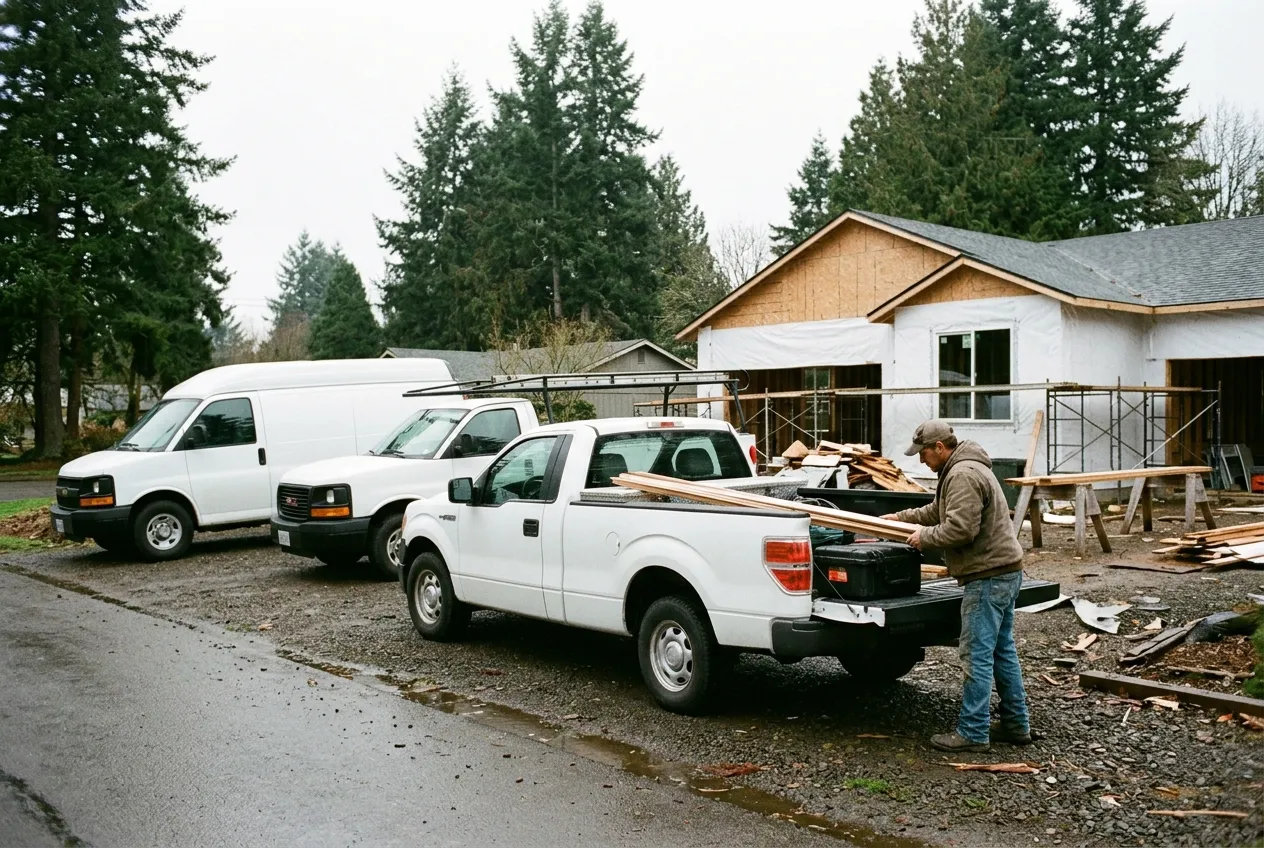
Commercial Auto Insurance
Coverage for vehicles operated in your business, including work pickups, service vans, and delivery vehicles. May include commercial liability and vehicle damage protection.
Explore coverage
Workers' Compensation Insurance
Provides statutory benefits for employees experiencing a work-related injury or illness, helping cover medical expenses and a portion of lost wages.
Explore coverage
Commercial Property Insurance
Helps protect the physical assets of your business—including owned buildings, tenant improvements, office furniture, retail inventory, and in-shop equipment—against covered risks.
Explore coverage
Compare clear options in your language
Our licensed advisors compare different carriers across Oregon and Washington and normally respond within 60 to 90 minutes during business hours.